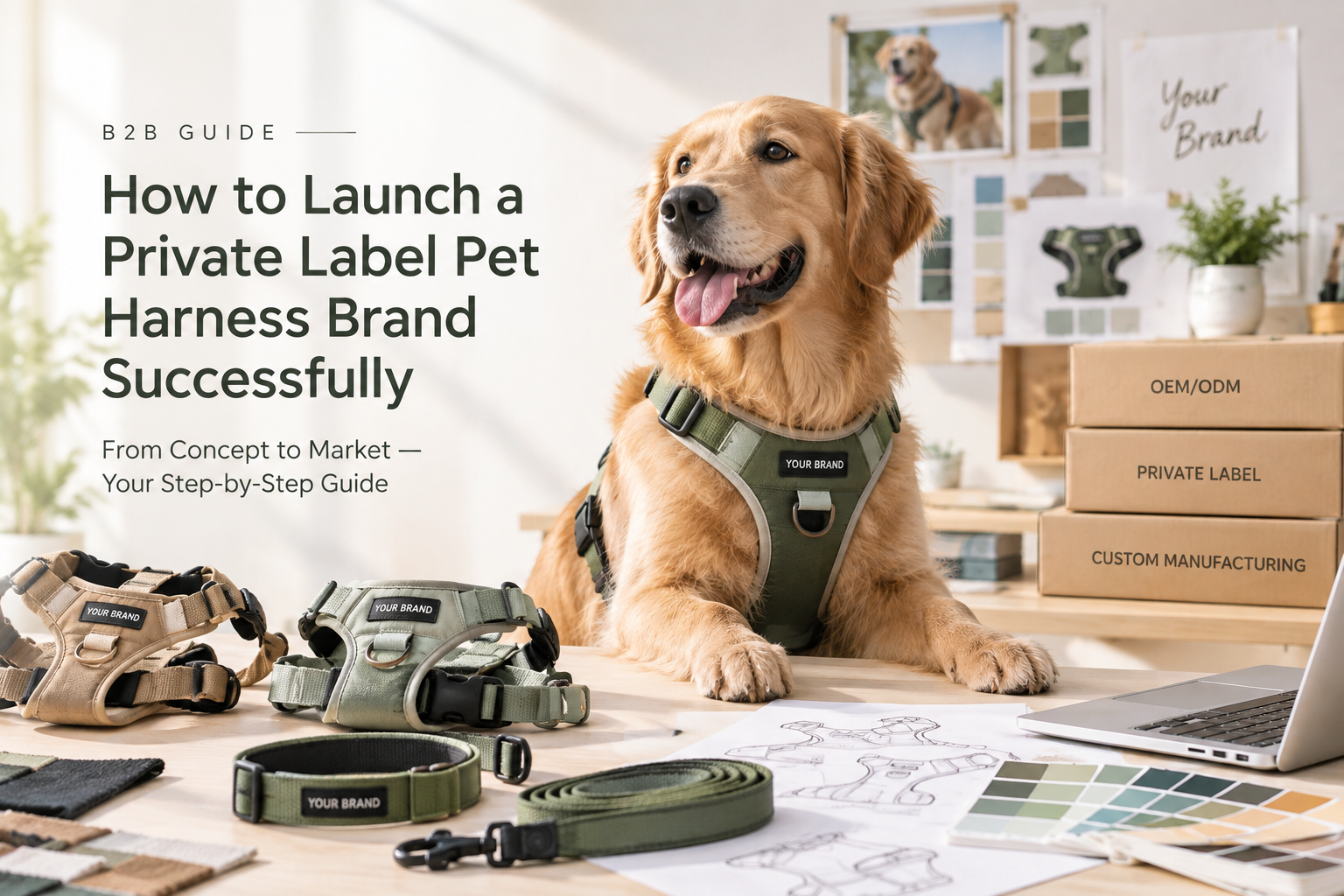
Die Einführung einer Eigenmarke für Haustiergeschirre stellt einen der zugänglichsten und skalierbarsten Wege in die Welt dar $300 Milliarden weltweite Heimtierindustrie. Unlike reselling third-party products, private labeling allows you to control pricing, differentiate from competitors, and build equity in a proprietary asset. Jedoch, success requires more than a logo slapped on a generic design. It demands strategic product development, rigorous manufacturing oversight, and a launch sequence that builds trust from day one. Drawing on over ten years of private-label manufacturing experience for 500+ global clients, Dongguan Coowone Outdoor Products Co., Ltd. outlines the complete roadmap from concept to market dominance.
Phase 1: Market Positioning and Niche Selection
Before contacting manufacturers, define your brand’s unique market position. The pet harness category is not monolithic; it is segmented by use case, price tier, and emotional appeal. Are you targeting urban millennials who view their dogs as children and demand pastel aesthetics with Instagram-worthy packaging? Or are you building a performance brand for trail runners and search-and-rescue handlers who prioritize load-bearing durability above all else? Perhaps your focus is on senior dogs and rehabilitation, where orthopedic padding and easy-on designs create life-changing value.
Each niche has different material, Design, and compliance requirements. A tactical harness for Belgian Malinois requires 1680D nylon, MOLLE-Gurtband, and steel hardware. A fashion harness for French Bulldogs demands lightweight construction, atmungsaktives Netz, and quick-release buckles that accommodate broad chests. Your niche selection dictates every downstream decision, from factory vetting to digital marketing strategy. Spend at least two weeks analyzing competitor reviews, social media engagement, and Amazon search volumes before finalizing your direction.
Phase 2:Choosing the Right Manufacturing Partner
Your manufacturer is your most important business partner. A poor choice results in quality failures, compliance violations, and cash flow crises. Begin by filtering candidates through the certification lens. ISO9001 indicates systematic quality management; BSCI or Sedex satisfies retailer ethical sourcing requirements; CE, CPSIA, und REACH certifications are mandatory for EU and North American market access. Demand current third-party test reports—never accept outdated documents or self-declarations.
Evaluate production capabilities against your projected growth. Can the factory support a 500-unit minimum order for your launch, then scale to 5,000 units within six months? Do they offer OEM and ODM services to accommodate both custom designs and catalog adaptations? Bei Coowone, our three dedicated production lines and flexible MOQ structures allow emerging brands to test the market without committing to massive inventory. We also maintain in-house hardware sourcing and raw material inventory, reducing lead times by weeks compared to fragmented supply chains.
Communication quality is equally important. Your manufacturer should respond within 24 hours, provide regular photo and video updates during production, and willingly sign Non-Disclosure Agreements to protect your intellectual property. During development, insist on a physical prototype within 7 Zu 10 days so you can test fit, function, and finish before mass production begins.
Phase 3: Product Development and Design Translation
Translating your brand vision into a manufacturable product requires a clear technical pack (Tech-Paket). This document should include dimensioned sketches, material specifications, hardware callouts, color references using Pantone codes, and branding placement guidelines. If you lack design expertise, work with a manufacturer that offers OEM design support. Our in-house engineering team assists private-label clients with 3D modeling, material selection, and prototype iteration, ensuring that your aesthetic vision translates accurately into production reality.
Material selection directly impacts retail pricing and customer satisfaction. Webbing options range from cost-effective polypropylene to premium solution-dyed nylon and sustainable rPET. Padding choices include basic foam, ventilated neoprene, and orthopedic memory foam. Hardware finishes can be customized from matte black aluminum to polished brass. Each choice carries implications for weight, Haltbarkeit, kosten, and market positioning. A comprehensive partner will guide you through these trade-offs using a landed cost calculator rather than simply quoting the lowest possible configuration.
Phase 4: Branding, Verpackung, and Unboxing Experience
In private-label pet products, the unboxing experience is as important as the product itself. Your packaging should communicate quality, Sicherheit, and brand values before the customer ever touches the harness. Consider custom mailer boxes with magnetic closures for luxury positioning, or minimal recycled cardboard with soy-based inks for sustainability-focused brands. Internal tissue paper, thank-you cards, and QR codes linking to training videos deepen the emotional connection and reduce returns caused by improper fitting.
Product labeling must comply with target-market regulations. US products require country-of-origin labels and care instructions. EU products need CE marking and material composition disclosures. All labels should include your brand name, website, and batch number for traceability. Bei Coowone, our packaging and labeling services handle these regulatory details as part of the production workflow, ensuring your products arrive market-ready.
Phase 5: Einhaltung, Testing, and Risk Mitigation
Every jurisdiction enforces product safety standards that private-label brands must meet. In the United States, CPSIA mandates lead and phthalate limits, while ASTM F2548 provides voluntary but widely expected mechanical safety benchmarks for dog harnesses. European markets require CE marking under the General Product Safety Directive and REACH compliance to control hazardous chemical substances. Australian, Canadian, and Japanese markets impose additional standards.
Before shipping, obtain current third-party test reports for your specific materials and finishes—not just factory-level certifications. Perform pre-shipment inspections using AQL sampling to verify dimensions, stitching quality, hardware function, and labeling accuracy. This proactive investment prevents costly recalls, negative reviews, and marketplace suspensions.
Phase 6: Launch Strategy and Scaling
With production underway, shift focus to go-to-market execution. Build a professional product photography suite using lifestyle images that show the harness in real-world contexts—city walks, trail hikes, café patios. Create detailed sizing guides with breed recommendations to reduce fit-related returns. Develop launch content that educates consumers on the benefits of your specific design, whether that is force-free no-pull mechanics, orthopedic support, or reflective safety.
For Amazon sellers, optimize listings around high-intent keywords while investing in Amazon Brand Registry to protect your intellectual property. For direct-to-consumer stores, leverage email pre-l campaigns and influencer partnerships with micro-pet bloggers to generate social proof before broad advertising spend. For wholesale accounts, prepare B2B sell sheets that include MSRP, margin structures, and reorder terms.
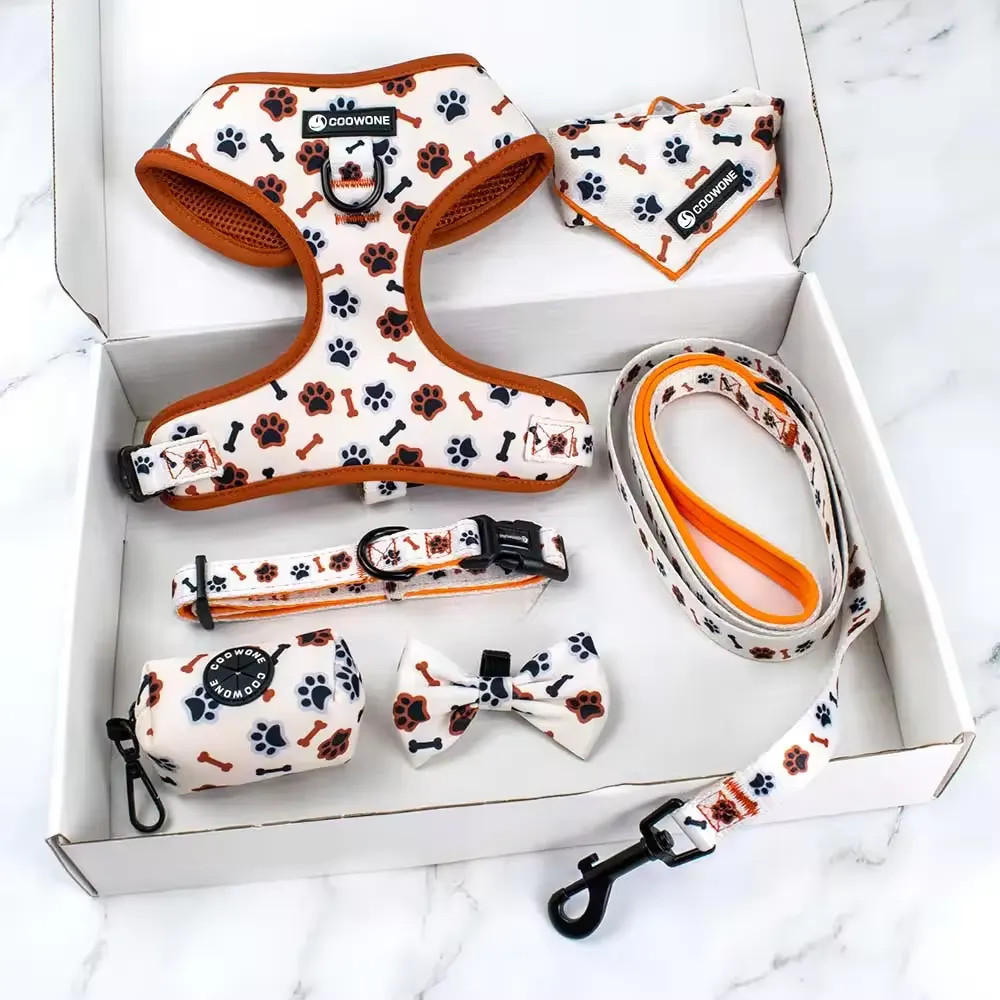
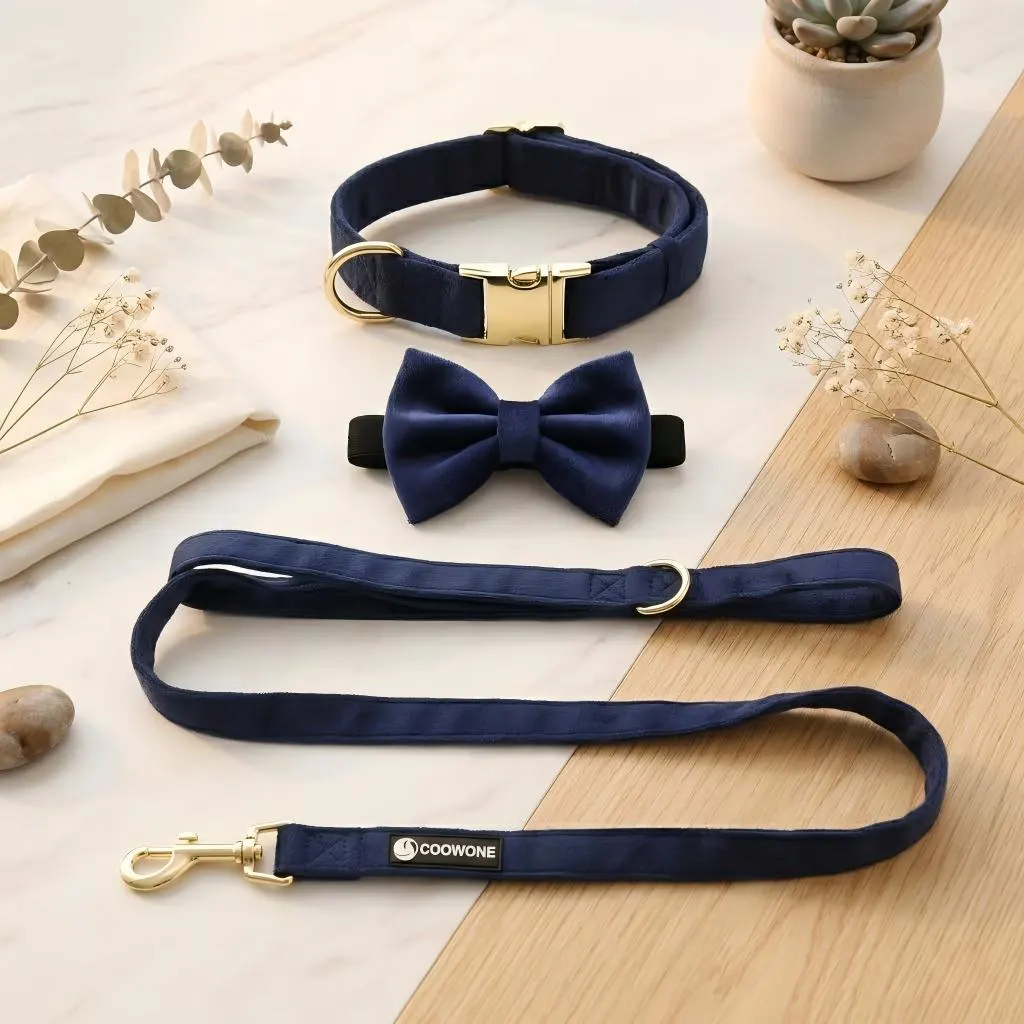
As sales validate demand, work with your manufacturer to introduce line extensions—matching leashes, Halsbänder, treat bags—that leverage your established brand equity. With a reliable partner managing production complexity, you can focus entirely on marketing and customer experience.
Abschluss
Launching a private-label pet harness brand successfully requires a disciplined sequence of niche selection, partner vetting, product development, compliance assurance, and brand building. By working with an experienced manufacturer like Coowone that integrates OEM/ODM design, certified quality control, and comprehensive branding services under one roof, you transform the complexity of international manufacturing into a scalable competitive advantage. Start with a clear vision, validate through prototypes, and scale with confidence.