
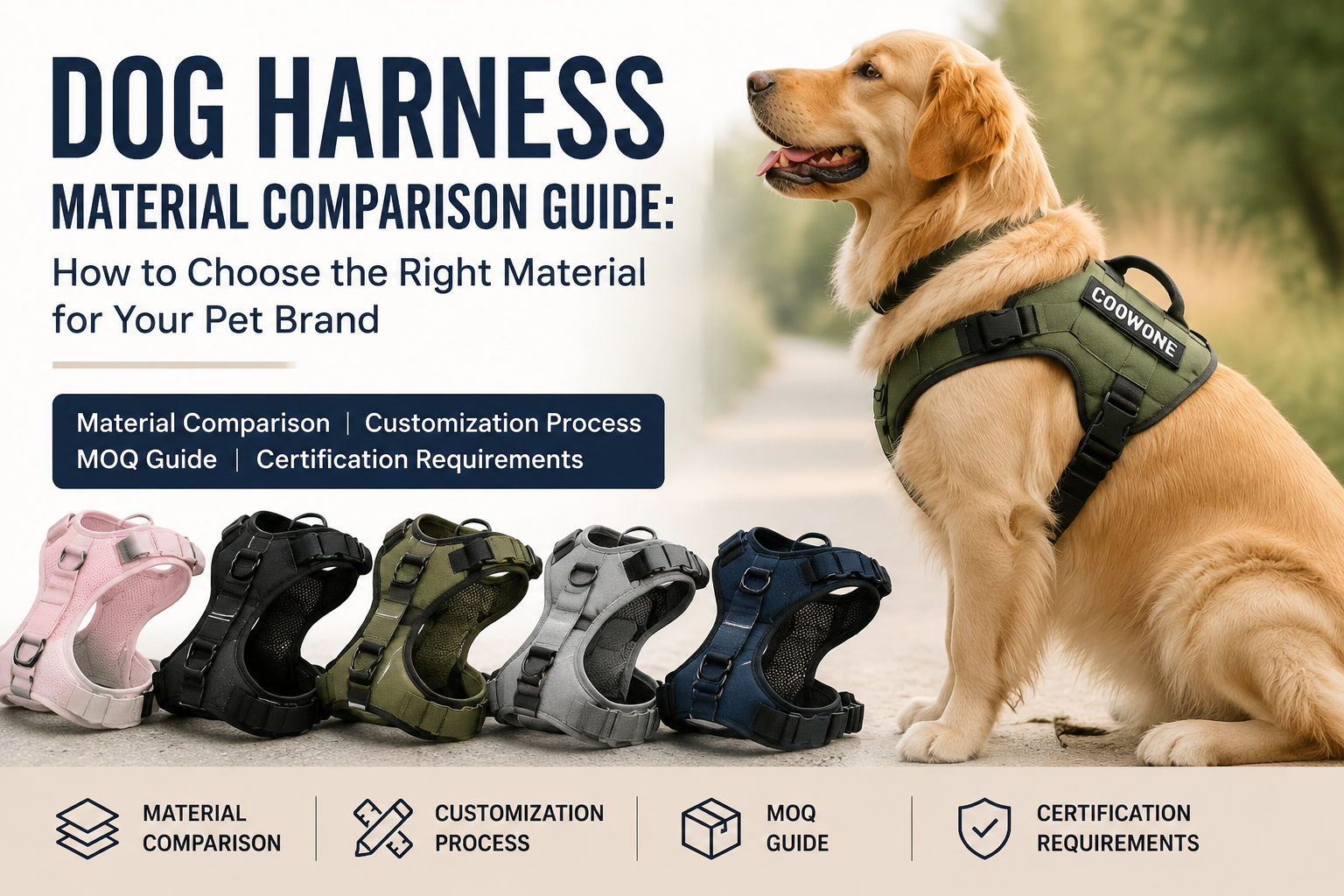
Introduction
The dog harness market continues to grow as more pet owners look for safer and more comfortable alternatives to traditional collars.
For pet brands, choosing the right dog harness material is one of the most important decisions when developing new products. The material affects product durability, comfort, production cost, and customer experience.
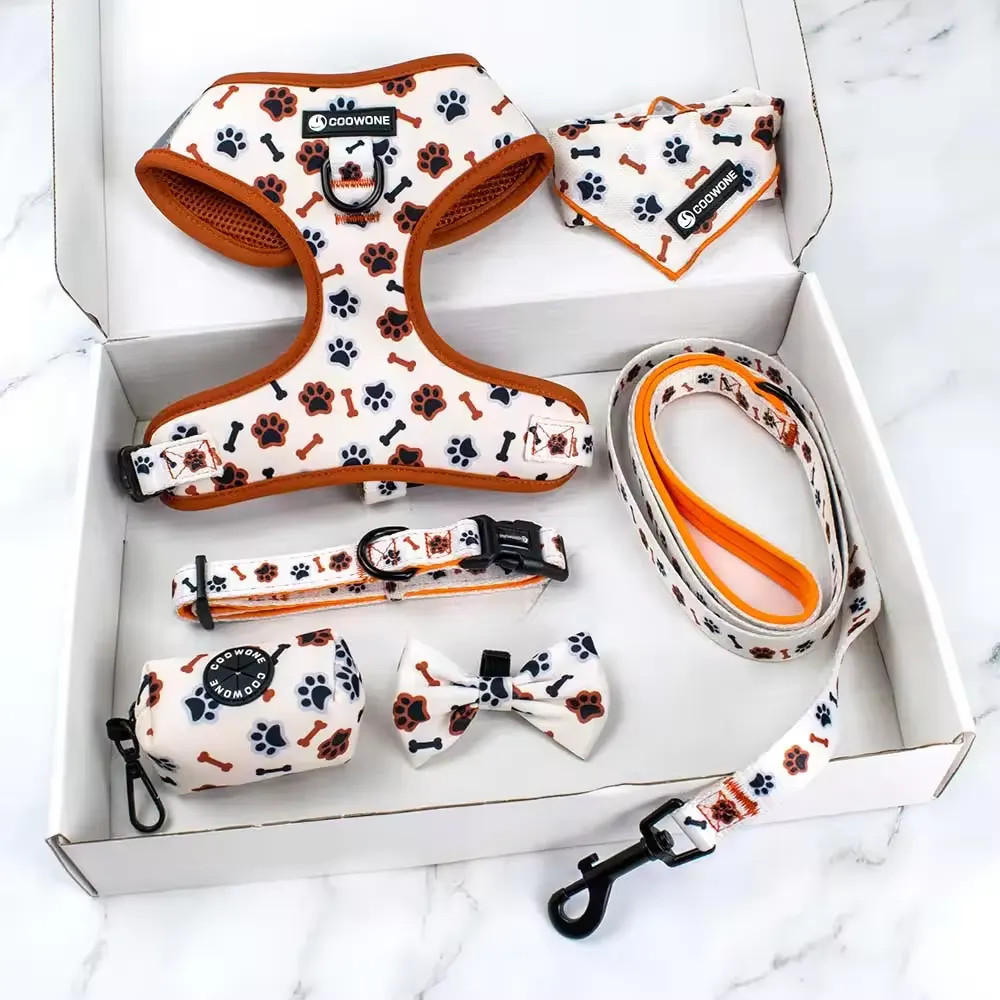
Whether you are developing a no pull dog harness, small dog harness, large dog harness, or premium outdoor harness, understanding different materials can help you create better products for your target market.
As a professional dog harness manufacturer, we help pet brands develop customized harness solutions based on different market requirements.
Why Material Selection Matters for Dog Harness Products
A successful dog harness is not only about appearance. Customers expect a product that is:
- Comfortable for daily walking
- Strong enough for active dogs
- Easy to adjust
- Durable for long-term use
- Safe during outdoor activities
For brands selling best dog harnesses, product quality directly influences customer reviews and repeat purchases.
Different materials provide different advantages. Choosing the right combination helps brands create products that stand out in a competitive pet market.
1. Nylon Dog Harness: A Popular Choice for Everyday Use
Nylon is one of the most common materials used in harness for dogs.
Advantages of Nylon:
✔ Strong tensile strength
✔ Lightweight design
✔ Cost-effective production
✔ Good abrasion resistance
✔ Suitable for large-scale manufacturing
A nylon dog harness is commonly used for:
- Everyday walking harnesses
- No pull dog harness designs
- Training harnesses
- Large dog harness products
For brands looking for reliable quality with competitive pricing, nylon remains one of the most practical options.
2. Polyester Dog Harness: Better for Custom Branding
Polyester is widely used by brands that focus on design and customization.
Compared with nylon, polyester provides:
- Better color retention
- More printing options
- Stable appearance after long-term use
For private label pet brands, polyester works well for:
- Custom logo printing
- Unique color collections
- Seasonal product launches
A professional dog harness supplier can help brands select the right fabric based on market positioning.
3. Mesh and Padded Dog Harness: Comfort-Focused Products
Comfort has become an important buying factor for modern pet owners.
A padded or breathable mesh dog harness is popular because it provides:
- Better airflow
- Reduced pressure points
- Improved wearing comfort
These materials are commonly used for:
- Small dog harness
- Dog harness for small dogs
- Premium walking harnesses
Small dogs usually need lightweight designs, while larger breeds require stronger structures and reinforced stitching.
4. Special Functional Dog Harness Materials
Different customer groups require different functions.
No Pull Dog Harness
A no pull dog harness is designed for dogs that tend to pull during walking.
Common features include:
- Front clip attachment
- Reinforced chest support
- Adjustable straps
Keywords related to this category include:
- dog harness no pull
- best no pull dog harness
- non pull dog harness
- easy walk dog harness
Dog Harness With Handle
A dog harness with handle provides additional control during outdoor activities.
It is often used for:
- Hiking
- Training
- Working dogs
- Large breeds
Durable materials and reinforced handles are important for this type of product.
Service Dog Harness and Tactical Dog Harness
Professional working dogs require specialized products.
A service dog harness usually focuses on:
- Comfort for long wearing periods
- Clear identification
- Functional design
A tactical dog harness requires:
- Heavy-duty materials
- Strong hardware
- Reinforced stitching
These products usually require higher manufacturing standards compared with standard walking harnesses.
Dog Harness Material Comparison
| Material | Durability | Comfort | Cost | Suitable Products |
|---|---|---|---|---|
| Nylon | High | Medium | Low | Everyday dog harness, no pull harness |
| Polyester | Medium-High | Medium | Medium | Custom branded harness |
| Mesh | Medium | High | Medium | Small dog harness, premium harness |
| Neoprene Padding | High | Very High | Higher | Premium dog harness |
How Pet Brands Develop a Custom Dog Harness
Choosing materials is only the first step.
A complete custom dog harness development process usually includes:
1. Product Concept
Brands provide:
- Target customers
- Design ideas
- Market positioning
- Expected price range
2. Material Selection
Manufacturers recommend:
- Webbing materials
- Fabric options
- Padding solutions
- Hardware choices
3. Sample Development
Before mass production, samples are created to check:
- Size fitting
- Comfort
- Function
- Appearance
4. Bulk Production
A reliable dog harness manufacturer should provide:
- Quality inspection
- Production control
- Packaging support
- Export experience
MOQ and Customization Considerations for Pet Brands
Many new pet brands are concerned about MOQ.
The MOQ for a custom dog harness depends on:
- Material availability
- Design complexity
- Logo customization
- Color quantity
- Production process
Stock materials may allow lower MOQ, while fully customized designs usually require larger quantities.
Working with an experienced dog harness supplier helps brands balance customization and investment risk.
How to Choose the Right Dog Harness Manufacturer?
When searching for a supplier, brands should evaluate:
Manufacturing Experience
Can the supplier produce different types of harnesses?
Examples:
- No pull dog harness
- Dog harness with handle
- Service dog harness
- Tactical dog harness
Customization Ability
A good OEM/ODM partner should support:
- Custom colors
- Custom logos
- Custom packaging
- Product improvements
Quality Control
Reliable manufacturers should have clear inspection procedures to ensure every product meets expectations.
Conclusion
The best dog harness is not only determined by design but also by material selection, manufacturing quality, and product positioning.
Whether you are developing a no pull dog harness, small dog harness, large dog harness, or customized pet product collection, choosing the right material and manufacturing partner is essential.
For pet brands looking for a reliable custom dog harness manufacturer, professional support from design to production can help create competitive products for the global market.