
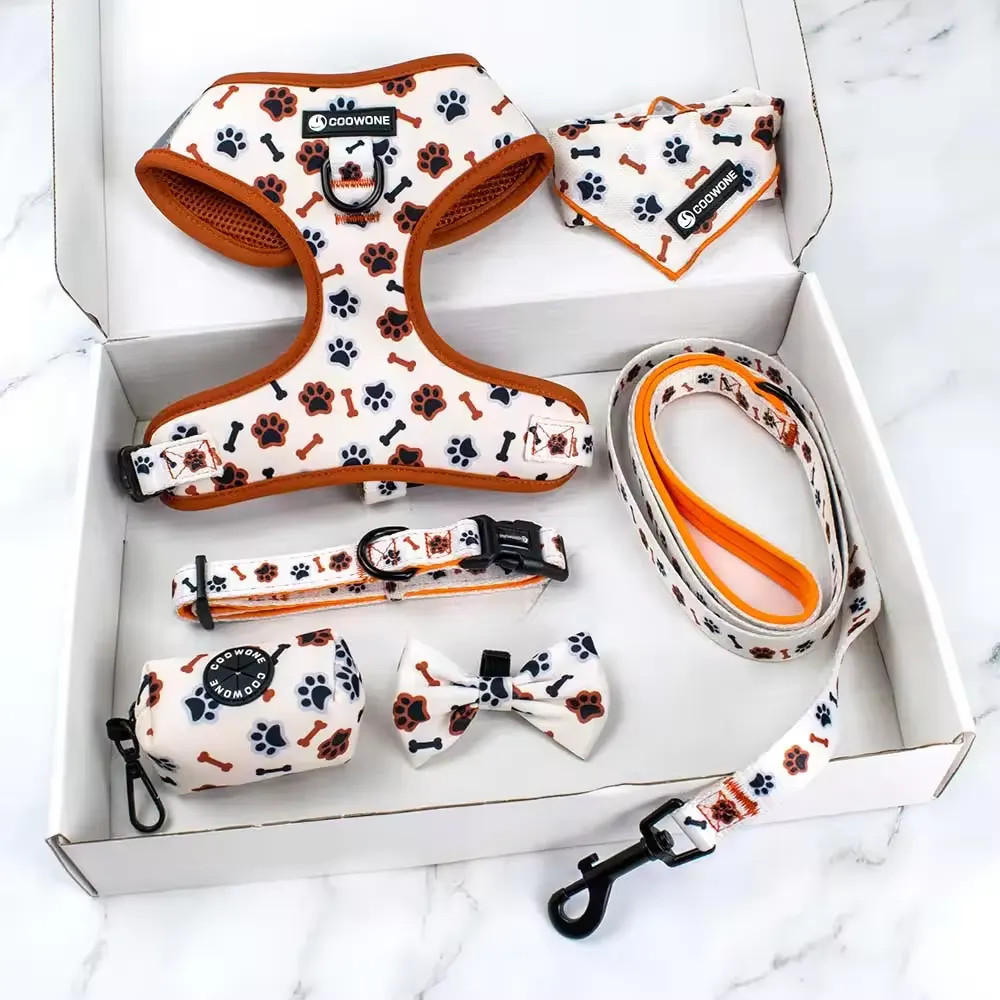
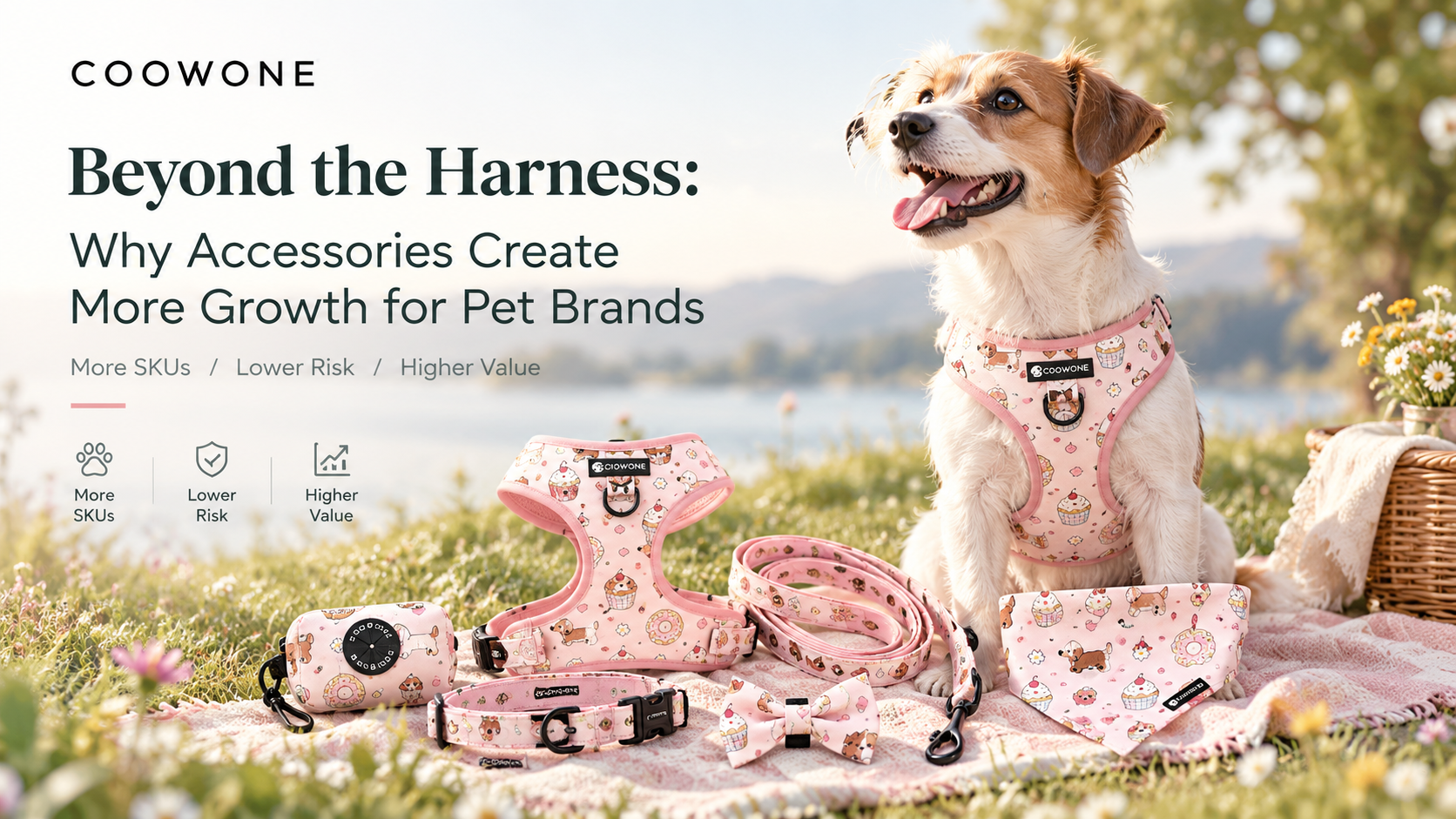
Almost every pet brand starts the same way: one hero product, done properly. Usually a harness, because it is the highest-consideration purchase in the category and the one that earns the follow.
Then growth stalls. Not because the harness is bad — because a dog needs roughly one harness every eighteen months, and your customer has already bought it.
The category data makes the ceiling obvious. The global pet accessories market is valued at roughly USD 7.6 billion in 2026, growing at about 7.1% annually — and the collars, leashes and harnesses segment accounts for 31.7% of it.[1] Put bluntly: two thirds of what your customer spends on pet accessories is something you do not currently sell.
This article is about the other 68%, and specifically about why the economics of those products are structurally kinder than the ones you started with.
The size problem nobody prices in
Here is the difference that matters most, and it has nothing to do with manufacturing cost.
A harness multiplies your inventory. An accessory does not.
| Продукт | Size positions per design | What one artwork becomes |
|---|---|---|
| Dog harness | 4–5 (XS–XL) | 5 SKUs to stock, photograph and forecast |
| Dog collar | 3–5 | 3–5 SKUs |
| Поводок | 1–2 (length) | 1–2 SKUs |
| Treat pouch | 1 | 1 SKU |
| Walking bag | 1 | 1 SKU |
| Poop bag holder | 1 | 1 SKU |
| Water bottle holder | 1 | 1 SKU |
| Bandana or bow tie | 1–3 | 1–3 SKUs |
Figure 1 — Size positions per design. This table is the reason accessory economics look different from harness economics.
Run that through a real example. Say you are launching one hero print across a small range:
- Harness alone: one design becomes five inventory positions. Your capital is spread across five bets, one of which (Середина) will sell out while two (XS and XL) will likely sit past season.
- Harness plus four accessories: the same design becomes nine visible products on your store, but only five of them are size-fragmented. The other four are single-position SKUs that either sell or do not, with no size curve to guess at.
You are not spending less. You are getting more merchandisable SKUs and more buying occasions per design — and dramatically less exposure to the single most common failure in pet apparel, which is guessing the wrong size curve.
This is why the cheapest-looking product is often the most profitable. A poop bag holder carries no size risk, almost no return risk, sits at an impulse price point, and gets replaced when the dog loses it. Judged purely on unit margin it looks trivial. Judged on risk-adjusted return it frequently beats your hero SKU.
Tier 1: the lead-and-control layer
This is the closest adjacency to your harness, and the easiest first expansion because customers already understand it.
| Продукт | What it solves | Notes for your line |
|---|---|---|
| Воротник | Everyday ID and tag host — the highest-frequency purchase in dog accessories[3] | Still needs a size range, but narrower than a harness. The natural bundle partner for any harness. |
| Поводок | The obvious add-on | Usually sold as a набор with the collar. Sets convert well because they remove a second decision. |
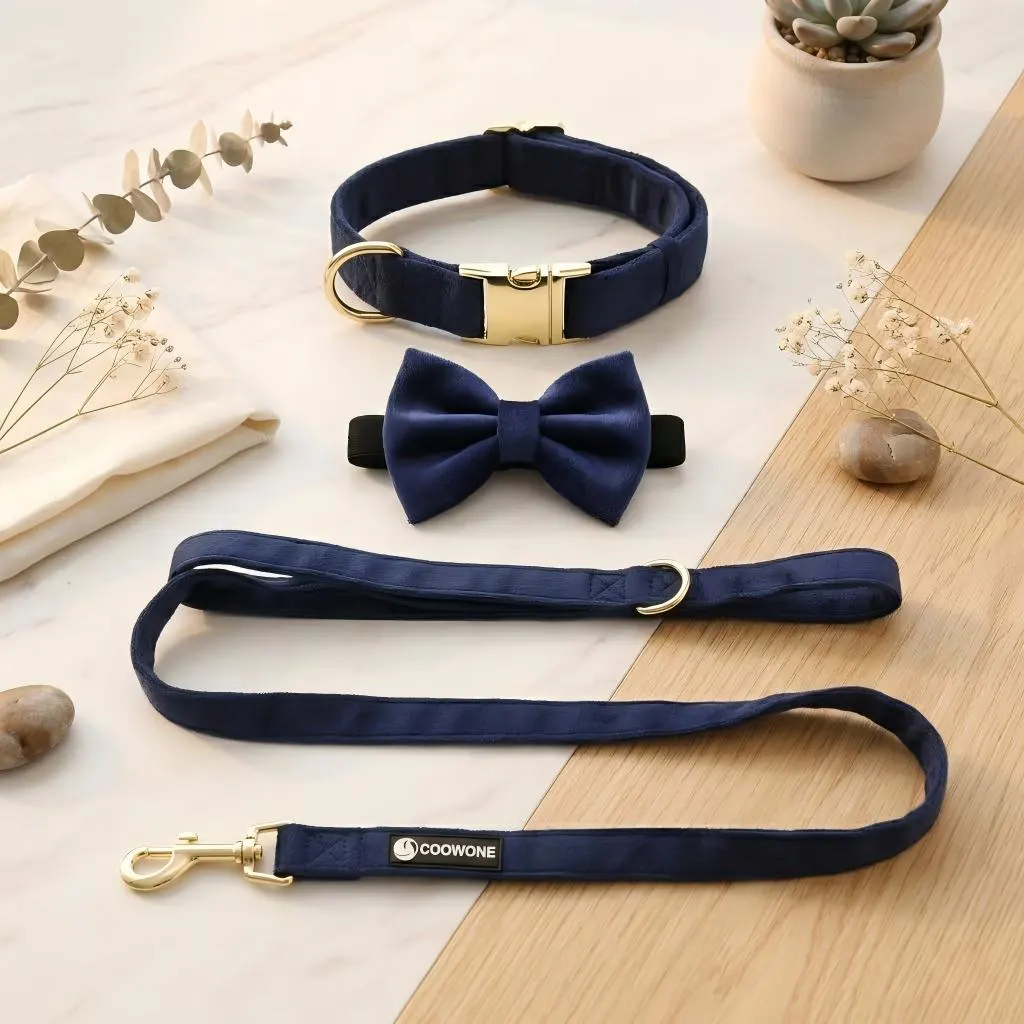
| Print collar & leash set | Design-led buyers | Where your artwork does the most work — flat ribbon takes print cleanly. |
| Nylon collar & leash set | Durability and entry price point | The workhorse tier; good for bundles and promotions. |
| PVC-coated collar & leash | Wet climates, muddy dogs | Waterproof and wipe-clean. Commands a premium over nylon with no visible difference in effort. |
| Leather collar & leash | Premium and gifting | Ages visibly; needs honest copy about care. Strong perceived-value lift. |
| Поводок без помощи рук | Running, hiking, dog sports | A genuinely different use case, not a variation. Attracts a distinct customer segment to the same store. |
| Rope lead | Climbing-rope aesthetic, outdoor positioning | Heavy, tactile, photographs well. Strong with adventure-positioned brands. |
| Luxury collar & leash | Occasion, portrait, wedding and gift | Higher ticket, lower volume, highly seasonal. Good for Q4 capsules. |
| Cat collar & leash set | The segment almost nobody serves | Breakaway safety buckles are non-negotiable here. A whole second audience on the same artwork. |
The cat gap, specifically
Most pet brands are dog brands with a cat tab nobody clicks. Cat accessories consistently underperform not because the demand is missing, but because the range is three products deep.
A custom cat collar needs different engineering — a breakaway or safety-release buckle so a collar that catches on something releases rather than tightens. Get that spec right, communicate it clearly, and you unlock a customer base with no reason to be loyal to dog-first brands.
Tier 2: the carry layer
This is where the size advantage turns into real margin, and it is the tier most pet brands never reach.
First, one distinction worth getting right, because confusing these two costs sales:
- Pet carrier bag — carried by the human, containing the dog. Sizing, ventilation, structure and load-bearing seams matter. Higher ticket, higher return risk if the dog does not fit, so publish interior dimensions and weight guidance prominently.
- Dog backpack — worn by the dog, for carrying its own water, treats and waste bags. Adventurous positioning, low ticket, almost no fitting problem beyond girth adjustability.
| Продукт | What it solves | Notes for your line |
|---|---|---|
| Treat pouch | Training — the highest-frequency use item in the whole walk | Clip-on or belt. Silver to customers actively training. High replacement rate. |
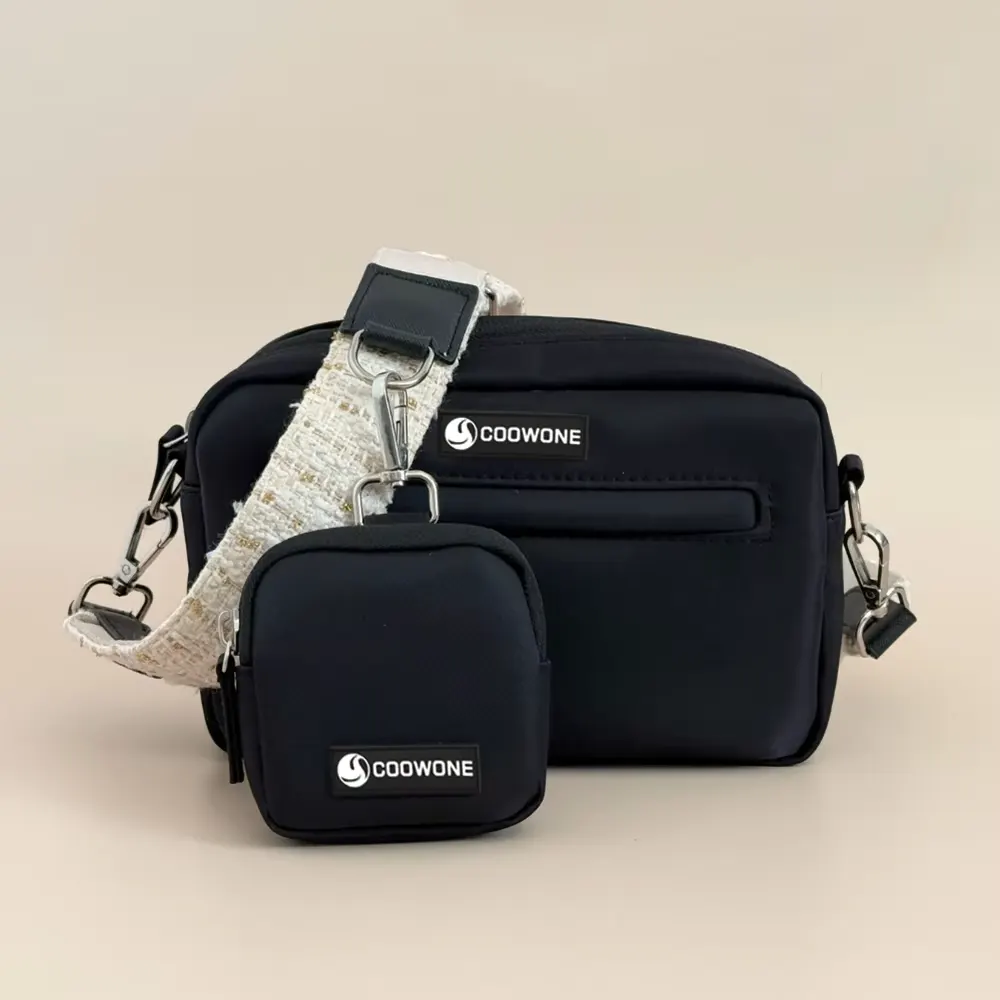
| Dog walking bag | Carrying everything for the walk | The lifestyle hero of this tier. Crossbody silhouettes read as the owner’s bag, which justifies a higher price. |
| Poop bag holder | A small daily annoyance | Lowest price point in your range, highest impulse attach. Excellent bundle filler and gift-with-purchase. |
| Zipper waist bag | Hands-free walking and running | Shares construction with the hands-free leash — efficient to develop alongside it. |
| Water bottle holder | Summer and long walks | Strongly seasonal. Good Q2 launch, poor Q4 bet. |
| Organiser bag / pouch | Everyday carry of treats, ключи, телефон | Crosses over into general accessories; widens your addressable customer. |
| Pet carrier bag | Transporting small dogs | The highest-ticket item in this tier. Insist on interior dimensions in your listings. |
| Dog backpack | Adventure and hiking positioning | Discussed above — different product entirely. |
| Bag accessories | Straps, clips, pouches that extend the system | Attach rate builder; low development cost. |
Why the economics actually work
Three advantages stack on top of each other. Individually each is modest; together they change what you should merchandise first.
1. Lower return exposure. A harness return is usually a fit failure — chest girth guessed rather than measured. A pouch that does not fit is a rarity, because it mostly does not have to fit anything. Returns are the hidden tax on every size-dependent category.
2. Higher repeat purchase. Treat pouches get filthy. Poop bag holders get lost. Bandanas go through the wash and come out sad. A harness is a two-year purchase; these are annual or better. Repeat purchase is what turns a transaction into a customer.
3. Bundle economics. Across Shopify and marketplace benchmarks, bundles are commonly reported to raise average order value by 20–35%, with bundle return rates running 10–15% lower than the same items sold individually.[2] The reason is straightforward: “обуздать + leash + pouch” solves one complete job, so the decision friction collapses. One bundle decision instead of three separate ones.
The rule that separates good bundles from unsold ones: bundle products that belong to the same job. “Going for a walk” is a job. “Dog things” is not — nobody buys a feeding bowl because they needed a leash.
One artwork, six products
There is a supply-side benefit too, and it is the practical one you will feel first.
When you develop a print, pattern or colour story, you pay for that development once. Rolling it across six categories means:
- One sampling round covering a coordinated range rather than six separate developments
- One photoshoot producing a consistent collection instead of six disconnected ones
- One artwork file reused — a spray-and-pray approach to the entire range
Categories that share an artwork need compatible decoration methods to look like a set. Sublimation works beautifully on flat polyester surfaces — collars, поводки, bandanas — but not on ribbed corduroy or pile. Embroidered patches and TPU rubber labels are the reliable cross-category option: they read identically on webbing, neoprene, canvas and fleece, which is what makes a mixed-material set actually look like a set.
Plan your artwork with that constraint in mind from the start and you will get one sample round instead of four.
A sensible expansion order
| Stage | Add | Why this order |
|---|---|---|
| Stage 1 | Воротник + leash set | Closest adjacency, highest attach rate, sets convert |
| Stage 2 | Treat pouch + poop bag holder | Low ticket, no size risk, immediate bundle depth |
| Stage 3 | Walking bag or waist bag | Higher ticket, lifestyle positioning, a genuine margin step up |
| Stage 4 | Seasonal entry (water bottle holder, gift sets, bandana) | Lets you launch something new without committing to another size curve |
| Stage 5 | Carrier bag or cat line | A second audience or a higher ticket — only once the core range is proven |
Figure 2 — Expansion order reflects risk, not revenue potential. Each stage buys information for the next.
Note what is нет on this list early: another harness structure. Adding a second harness variant fragments the one size curve you have just started to understand. Add width across categories first; go deeper within a category once you trust your data.
Часто задаваемые вопросы
Why not just add more harness designs?
Because every harness design multiplies by your size count. Two harness designs across five sizes is ten inventory positions and two untested size curves. The same development effort spent on four single-size accessories gives you more visible products, more price points and more repeat-purchase opportunities, with none of the size risk.
Which accessory has the best margin?
It depends less on unit cost than on the three factors above. Bandanas and bow ties are typically the strongest risk-adjusted performers: single size, full-bleed print, low development cost, frequently repurchased, and ideal as gift-with-purchase. Poop bag holders are the strongest impulse attach. Judge on risk-adjusted return, not manufacturing margin alone.
Should I carry cat products if my brand is dog-focused?
Да, provided you engineer them properly. The critical spec is a breakaway or safety-release buckle on collars. Get that right, say so clearly in your listing, and you reach customers that dog-first competitors are ignoring entirely.
How many products should a first bundle have?
Two to four. Bundle research consistently finds that bundles solve one buying job and that oversized or loosely related bundles underperform.[2] “Обуздать + leash + pouch” is a clean read. Six unrelated items reads as clearance.
Do I need separate photography for accessories?
Да, and it is cheaper than you think — because there is no size range to shoot. One pouch photographs once. Compare that with five harness sizes needing consistent lighting, scaling and model coverage, and you will see why accessory content costs a fraction of hero-product content.
Will adding accessories dilute my brand?
Only if the additions have nothing to do with each other. A walk-focused range — harness, воротник, leash, pouch, держатель мешка для мусора, walking bag — is coherent because it is built around one activity. That coherence is what customers experience as brand, not narrowness of product count.
Build the width, keep the focus
Your harness earns the customer. What happens after that determines whether you have a brand or a product.
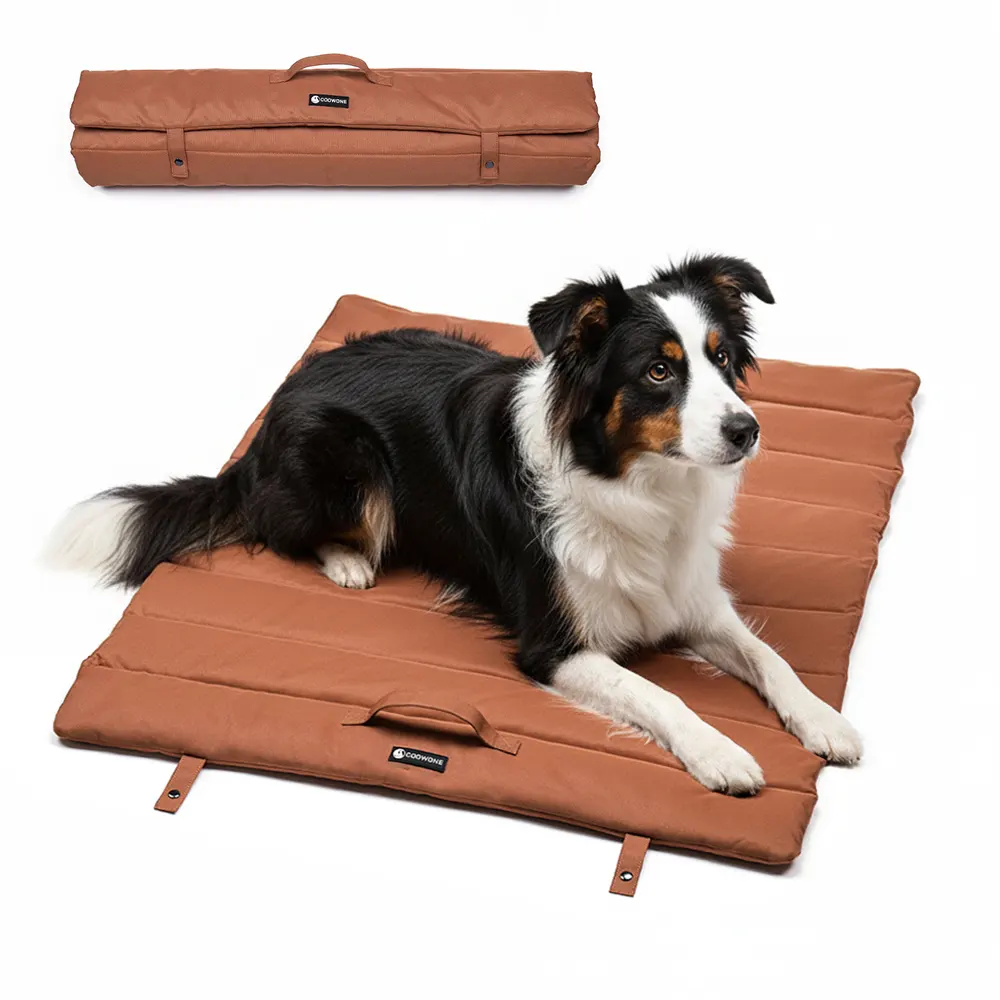
COOWONE manufactures across all of it — harnesses, collars and leashes, and a full carry range from treat pouches to walking bags and pet carriers — plus bandanas, bow ties, feeding bowls, car seat covers and blanket throws. One artwork across one coordinated range, one sampling round, one consistent collection.
Tell us what you want to add next →
Ссылки
- Grand View Research, Pet Accessories Market Size, Share & Trends Analysis Report, 2026–2033. Market valued USD 7.6 bn in 2026, CAGR 7.1%; воротники, leashes and harnesses segment = 31.7% of 2025 revenue. https://www.grandviewresearch.com/industry-analysis/pet-accessories-market-report
- Published Shopify and marketplace bundling benchmarks commonly report AOV lifts of 20–35% and bundle return rates 10–15% below individual items. These are industry rules of thumb rather than controlled studies; results vary sharply by discount depth, product fit and shipping cost. Sources: Buno Labs, How to Increase Average Order Value on Shopify with Bundles · EcomCalcTools, Product Bundle Performance in Ecommerce 2026. Substitute your own store data for planning.
- Persistence Market Research, Ошейники для собак, Поводки & Harnesses Market, 2026–2033. Notes collars as the dominant product segment at approximately 50% revenue share, attributed to universal purchase necessity and legal identification-tag requirements in multiple jurisdictions. https://www.persistencemarketresearch.com/market-research/dog-collars-leashes-harnesses-market.asp