
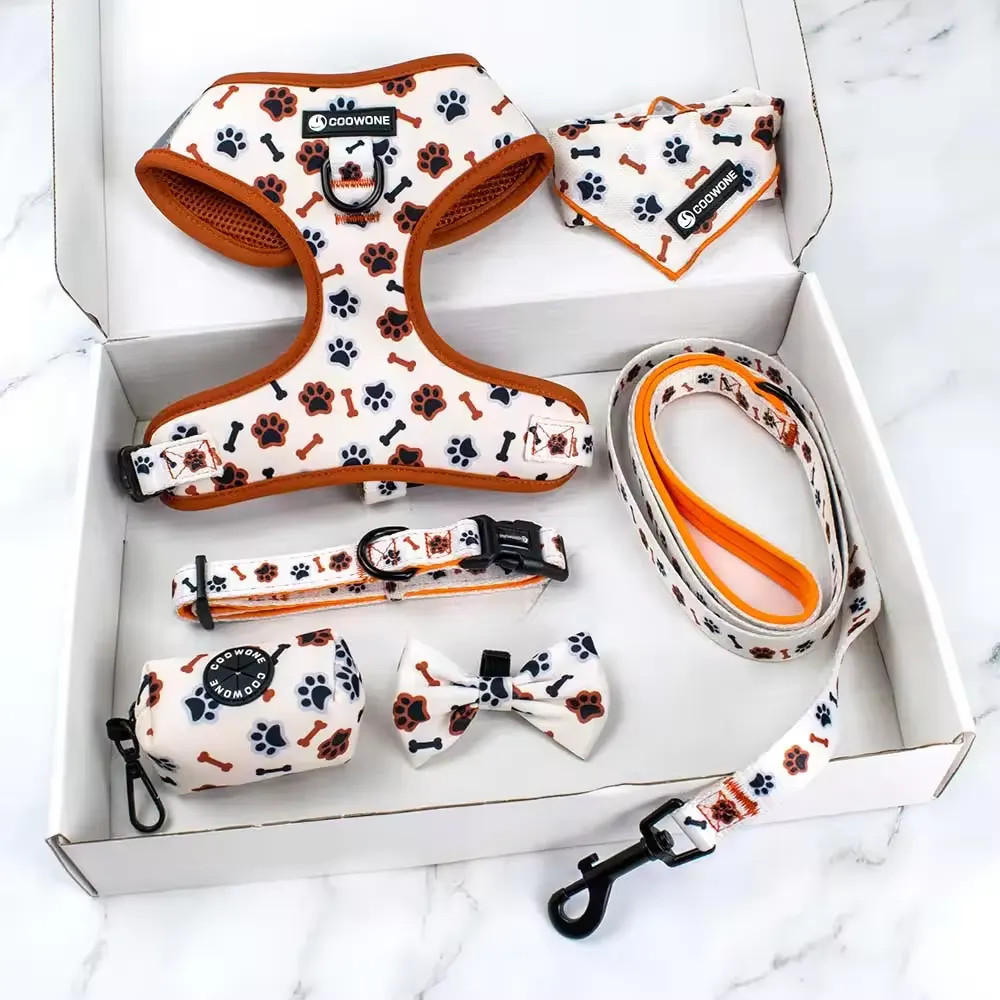
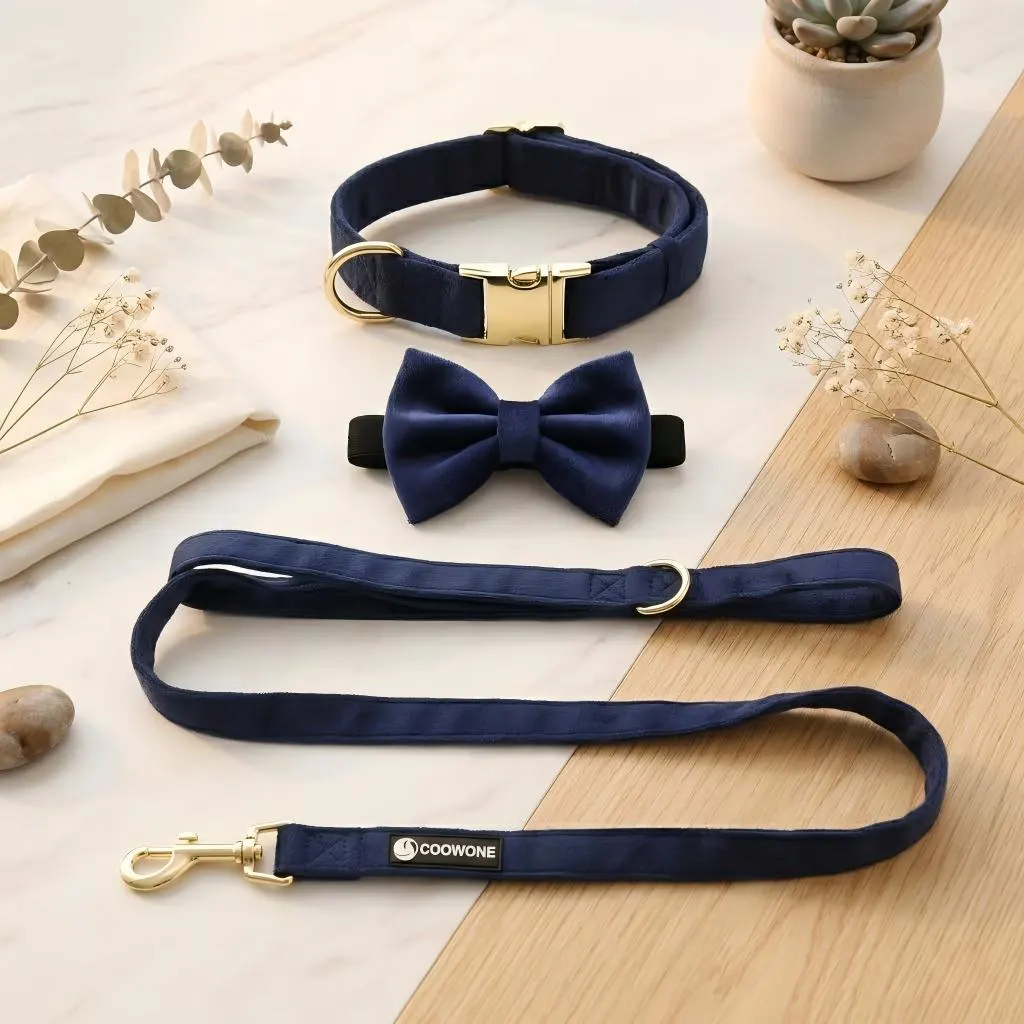
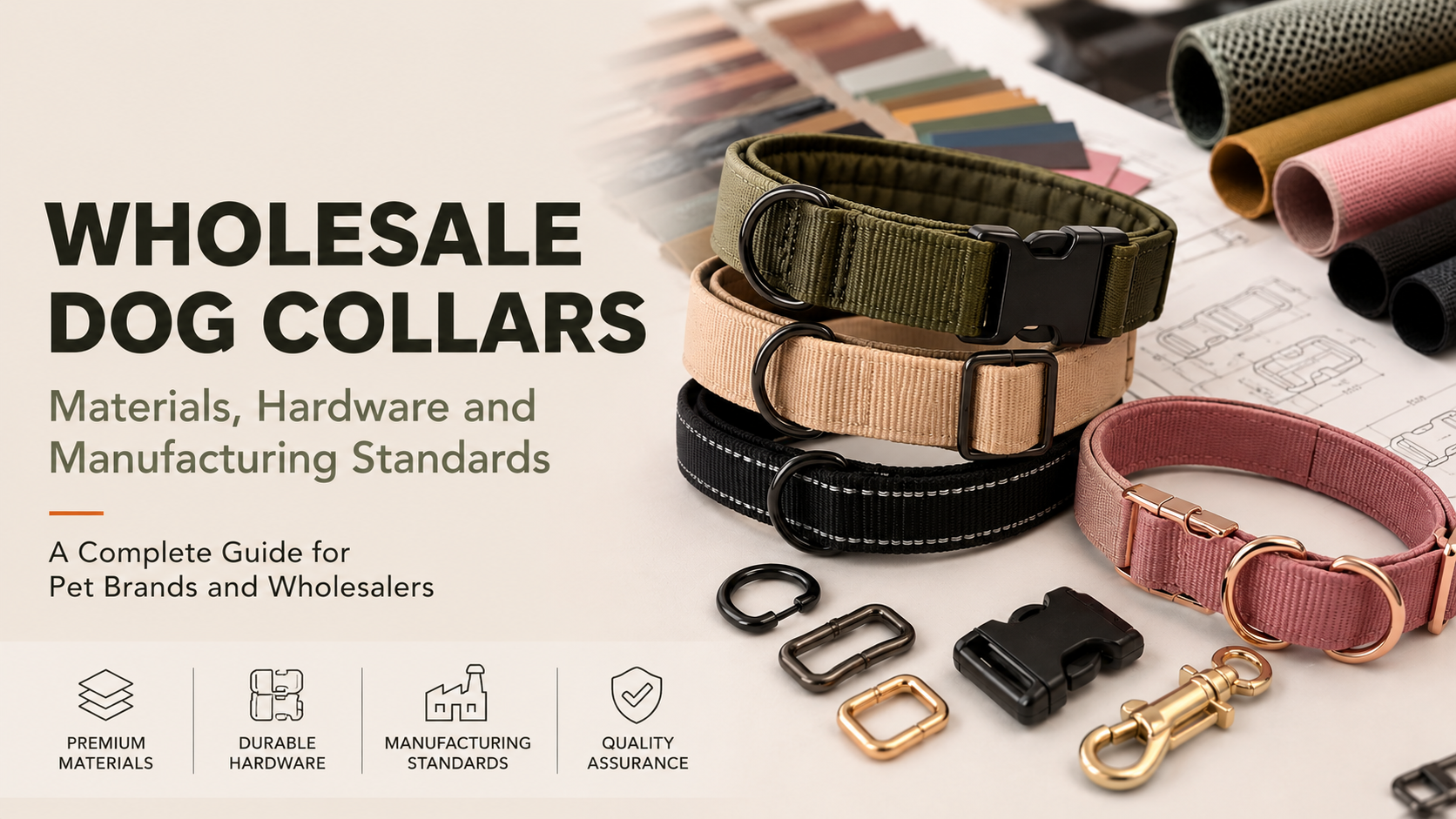
Ошейники для собак представляют собой наиболее фундаментальную категорию товаров в розничной торговле аксессуарами для домашних животных.. Они являются отправной точкой для новых владельцев собак., the highest-frequency replacement purchase, and the product category with the broadest price elasticity—from under two dollars for disposable economy collars to over two hundred dollars for artisan luxury leather pieces. For B2B buyers importing dog collars from Chinese factories, the category’s apparent simplicity conceals significant manufacturing complexity, material variation, hardware specification differences, and quality divergence that directly impact customer satisfaction, процент возврата, и репутация бренда. Компания Dongguan Coowone Outdoor Products Co., ООО. производит dog collars and integrated collar-harness-leash systems через нашу pet collars and leashes производственные линии, with material and hardware sourcing inspection supporting volume distribution.
Category Architecture: Beyond the Basic Collar
The term “dog collar” covers a product family with distinct structural requirements, use cases, and manufacturing specifications. Buyers must define their target segments precisely before engaging suppliers.
Flat Collars
The standard daily-wear collar. One-inch to two-inch width, simple buckle or snap closure, single D-ring for leash and tag attachment. Engineering requirements are minimal, but material quality variation is enormous.
Martingale Collars
Also called limited-slip or training collars. Feature a dual-loop system where the collar tightens under tension to a pre-set limit. Originally designed for sighthound breeds whose heads are narrower than their necks, martingales have expanded into general training use for dogs that pull or attempt to back out of flat collars.
Structural requirements:
- Sliding mechanism: The small control loop must slide freely under normal tension but not jam or bind under load.
- Limit stop: The collar must reach a maximum circumference under tension and not tighten beyond this point. The limit stop is typically a fixed fabric section or a metal chain segment of defined length.
- Width proportional to neck circumference: Martingale function depends on width ratio. А 25 mm martingale on a 60 cm neck performs differently than a 15 mm martingale on the same measurement.
Chain-Slip Collars (Slip Leads and Choke Chains)
Chain or rope collars that tighten fully under tension without a limit stop. These have declined in retail volume due to veterinary and training community opposition but remain in professional training and working dog contexts.
Prong/Pinch Collars
Collars with blunt metal prongs that apply distributed pressure around the neck under tension. Highly controversial, restricted or banned in some jurisdictions, and subject to elevated liability exposure. Most mainstream pet product buyers avoid this category.
Head Collars and Gentle Leader Devices
Addressed in detail in our behavioral control device guide, these are technically head halters rather than neck collars, but they occupy adjacent retail shelf space and consumer consideration.
Bark Control and Electronic Collars
Incorporate electronic modules for vibration, tone, or stimulation delivery. These are consumer electronics products with entirely different sourcing requirements from textile collars. Outside the scope of standard collar manufacturing.
Decorative and Fashion Collars
Prioritize aesthetic design over functional load-bearing. Sequins, charms, delicate fabrics, and non-structural hardware. These have their own manufacturing requirements but lower structural load specifications.
Material Specifications for Dog Collar Manufacturing
Nylon Webbing
The dominant collar material, offering strength, долговечность, color range, and cost efficiency.
- Denier range: 400D to 1,200D standard. Higher denier improves abrasion resistance and structural integrity. Premium collars use seatbelt-grade woven nylon at 1,200D to 1,800D.
- Coating: PU or PVC coating improves water resistance, color retention, and surface smoothness. Uncoated webbing absorbs moisture and stains but has a softer hand feel.
- Weave pattern: Flat weave for standard collars. Tubular weave for rolled collars that reduce fur-matting on long-coated breeds.
- Edge treatment: Woven edges are strongest and most durable. Folded edges with binding tape are acceptable for lighter-duty applications.
Polyester Webbing
- Offers superior UV resistance compared with nylon. Colors remain stable longer under sun exposure.
- Lower water absorption than nylon, making polyester preferable for wet-climate applications.
- Slightly lower tensile strength per denier than nylon, requiring marginally thicker webbing for equivalent load ratings.
Cotton and Natural Fiber Webbing
- Limited to fashion-positioned and eco-friendly product lines.
- Lower tensile strength than synthetic webbing. Requires woven reinforcement or lamination for structural collars.
- Natural fiber degradation from UV, moisture, and microbial exposure limits lifecycle in active outdoor use.
Leather
Premium positioning material with significant manufacturing skill requirements.
- Натуральная кожа: Highest quality, most durable, develops patina. Best structural performance but most expensive.
- Top-grain leather: Corrected surface with sanding and finishing. Uniform appearance but reduced structural longevity compared with full-grain.
- Genuine leather: Lower grade from split hides. Acceptable for fashion positioning but not load-bearing applications.
- Vegetable tanning vs. chrome tanning: Vegetable-tanned leather uses natural tannins, preferred for pets that mouth or chew collars. Chrome-tanned leather uses chromium salts, harder wearing but potentially irritating to sensitive skin.
- Thickness: 1.5 mm to 3.5 mm depending on collar width and expected load. Load-bearing collars require minimum 2.5 mm in the buckle and D-ring attachment zones.
PVC and Plastic Collars
- Waterproof, odor-resistant, easy to clean. Popular for water dogs, hunting dogs, and working dogs in wet environments.
- Material grades vary enormously. Medical-grade PVC with phthalate-free plasticizers is essential for pet safety. Economy recycled PVC may contain harmful additives.
- Tensile strength of PVC webbing is lower than nylon at equivalent cross-section. PVC collars require greater width or thickness for equivalent load ratings.
- Temperature sensitivity: PVC stiffens in cold conditions and softens in extreme heat. D-ring pull-out resistance degrades at elevated temperatures.
Metal Chain Collars
- Stainless steel, chrome-plated steel, or brass.
- Link diameter and gap specification determine strength and operating smoothness.
- Choke chains require smooth-finished links with burr-free surface to prevent hair pulling and skin abrasion.
BioThane and Coated Webbing
A polyester webbing core coated with PVC or TPU (thermoplastic polyurethane). Combines the strength of synthetic webbing with waterproof surface properties.
- TPU coating offers superior flexibility in cold temperatures compared with PVC coating.
- BioThane is a proprietary brand but has become a generic descriptor for this material class.
- Excellent for working dogs, service dogs, and outdoor applications.
Hardware Specification for Collar Manufacturing
Hardware selection defines the safety ceiling of any collar. Hardware failures are the most dangerous failure mode because they release the dog unexpectedly.
Buckles and Closures
- Side-release plastic buckles: Most common closure. Injection-molded nylon or acetal (POM). Must be sourced from recognized manufacturers (ITW Nexus, Woojin, Duraflex) because counterfeit buckles fail under lower load with brittle fracture.
- Roller buckles: Used on leather and heavy-duty collars. The roller reduces webbing abrasion during tightening. Brass or stainless steel preferred for corrosion resistance.
- Breakaway buckles: Designed to release under extreme tension to prevent strangulation. Required for outdoor cats, increasingly requested for dogs that play unsupervised with collar-wearing companions.
D-Rings and Leash Attachment Points
- Welded steel rings: Strongest configuration. The weld must be complete and free of gaps or porosity.
- Die-cast zinc rings: Lower cost but risk brittle fracture under impact. Not recommended for dogs over 15 kg or any dog with pulling behavior.
- Brass rings: Corrosion-resistant, favorable for leather collars. Lower tensile strength than steel. Acceptable for medium-duty applications.
- Ring diameter: Match to collar width. А 25 mm collar should mount a ring with minimum 20 mm internal diameter to permit free clip rotation.
Adjustment Hardware
- Triglides (adjustment sliders): Metal triglides (steel or brass) provide superior holding strength compared with plastic triglides under sustained tension. Однако, metal triglides fray webbing more rapidly.
- Keepers (strap retainers): Prevent adjustment strap ends from dangling. Often overlooked in specification but important for aesthetic finish and snag prevention.
Tag Attachment Hardware
- Split rings: Standard tag attachment. Stainless steel splitting rings are most durable.
- S-hooks: Some designs use S-hooks for tag attachment, which are easier to install but have higher loss rates.
- Tag silencers: Rubber or silicone rings that surround the tag to prevent metal-on-metal noise. Small component but high consumer appreciation.
Collar Width, Thickness, and Load Engineering
Collar strength is not determined by a single dimension but by the interaction of width, material tensile strength, hardware attachment reinforcement, and stitching pattern.
Width Guidelines by Breed Size
- Toy breeds (под 5 кг): 10 mm to 15 mm width.
- Small breeds (5 к 12 кг): 15 mm to 20 mm width.
- Medium breeds (12 к 25 кг): 20 mm to 25 mm width.
- Large breeds (25 к 45 кг): 25 mm to 35 mm width.
- Giant breeds (over 45 кг): 35 mm to 50 mm width.
Load Distribution at Hardware Attachments
The D-ring attachment point concentrates the full leash load into a small fabric area. Reinforcement strategies:
- Box-X stitching pattern: The standard reinforcement at D-ring and buckle attachment. Must use bonded nylon thread at minimum Tex 70.
- Reinforcement patch: A secondary layer of webbing or leather behind the attachment point, distributing load across a larger area.
- Rivet reinforcement: Metal rivets through webbing and reinforcement patch at the attachment point. Controversial in some markets because rivets can corrode or work loose.
Collar Manufacturing Quality Control
Incoming Material Inspection
- Webbing tensile testing: Random sampling from each lot for breaking strength verification against specification.
- Color consistency: Delta E colorimetry to confirm dye lot consistency within acceptable tolerance.
- Hardware batch testing: Buckle actuation force, pull-out load, and cycle life testing on representative samples.
In-Process Quality Control
- Stitching pattern verification: Automated or visual confirmation that box-X patterns meet specification dimensions.
- Size calibration: Each finished collar measured for minimum and maximum circumference at correct adjustment positions.
- Hardware function: Buckle engagement and release, triglide adjustment, D-ring rotation.
Finished Goods Testing
- Static load testing: The collar must sustain a static load of 3x the maximum rated dog weight for 60 seconds without seam separation, hardware deformation, or material failure.
- Dynamic load testing: Cyclic loading to 1.5x rated weight for 1,000 cycles simulates repeated leash jerks.
- Hardware corrosion test: Salt spray testing per ASTM B117 for hardware destined for coastal or marine environments.
Regulatory Compliance for Collar Distribution
Соединенные Штаты
- КПСИА вести, phthalate, and small parts compliance for collars marketed toward dogs under 30 pounds if component parts present choking risk.
- California Proposition 65 warnings for leather products using chrome tanning or hardware with cadmium plating.
European Union
- REACH SVHC compliance across all polymer, textile, leather, and metal components.
- EN 71-3 migration testing requirements for hardware if products are marketed in toy-adjacent categories.
Leather-Specific Compliance
- Chromium VI testing for chrome-tanned leather. Chromium VI is a known skin sensitizer and potential carcinogen. Maximum permissible levels under REACH: 3 mg/kg.
- Azo dye testing: Certain azo dyes that release carcinogenic aromatic amines are prohibited under EU and some US state regulations.
Color Trends and Consumer Positioning
Collar color and pattern are among the highest-margin customization opportunities available to private-label brands.
Material-Driven Color Capability
- Nylon webbing: Pantone-matched solid colors, gradient prints, reflective strip integration, and sublimation printing for complex patterns.
- Leather: Aniline, semi-aniline, and pigmented finishes offer different color depth and texture.
- PVC/TPU coated webbing: Solid color saturation with high gloss or matte finish. Less pattern flexibility than sublimated nylon but superior weather resistance.
Seasonal and Trend Cycles
Pet fashion cycles shorter than human fashion but still display seasonal direction. Spring pastel palettes, autumn earth tones, holiday-themed patterns, and sports-team colors represent predictable demand spikes.
Personalization Infrastructure
Many brands differentiate through name embroidery, ID plate integration, or charm attachment loops. Manufacturing programs should verify that facilities can support small-batch custom embroidery, engraving, or heat-transfer processes without requiring dedicated production line reconfiguration for each order.
Wholesale Economics
Factory cost benchmarks per unit (1,000-piece MOQ reference):
- Economy nylon flat collar: $0.80 к $1.50.
- Standard nylon flat collar with basic hardware: $1.20 к $2.50.
- Premium nylon with reflective trim: $2.50 к $4.50.
- Leather collar, top-grain: $3.50 к $8.00.
- Leather collar, full-grain: $6.00 к $15.00.
- Martingale nylon: $1.80 к $3.50.
- PVC/TPU coated collar: $2.00 к $4.00.
- BioThane-style collar: $3.00 к $6.00.
- Heavy-duty chain collar: $1.50 к $3.00.
Розничные цены:
- Economy: $5 к $12.
- Standard: $10 к $25.
- Premium nylon: $20 к $40.
- Leather: $30 к $100+.
The margin structure supports wholesale distribution at 2.0x to 2.5x landed cost across all tiers.
Packaging and Presentation
Collar packaging varies by channel:
- Hang-tag retail: Individual collars on cardstock hang tags with display hooks. Standard for brick-and-mortar pet specialty.
- Polybag/insert: Collar in clear polybag with printed insert card. Standard for e-commerce and mass retail.
- Gift box: Rigid or folding box for premium collars. Enables retail presentation at higher price points and supports gift-purchase occasions.
Private-Label Manufacturing Considerations
Logo Integration
- Тканые этикетки: Sewn into collar webbing or leather. Most durable but visible on both sides.
- Printed labels: Rubberized or heat-transfer logo on collar surface. Less durable but lower cost.
- Metal badges: Riveted or glued metal brand medallions on leather collars. Premium positioning.
- Laser engraving: On leather or metal hardware. Permanent, subtle branding.
Minimum Order Quantities
Nylon collar MOQs for basic models typically start at 500 к 1,000 pieces per color/size combination. Leather collar MOQs are lower (200 к 500 куски) due to higher per-unit value, but leather material sourcing may require full-hide commitments that increase effective minimums.
В Компания Dongguan Coowone Outdoor Products Co., ООО., наш collar and leash manufacturing spans nylon, leather, ПВХ, and BioThane-style constructions across toy through giant breed size ranges. Наш incoming material inspection and hardware pull-test documentation support both standard inventory and индивидуальные аксессуары для домашних животных private-label programs.
Заключение
Dog collar manufacturing is a category where material selection, hardware specification, reinforcement engineering, and compliance documentation determine the difference between a commodity product and a defensible brand asset. The market spans from disposable economy goods to heirloom-quality leather pieces, and successful B2B buyers match their sourcing strategy to their target segment with precision rather than attempting to serve all segments with undifferentiated product. In a category where many competitors compete on price alone, buyers who invest in material transparency, hardware testing, and construction quality build customer loyalty that transcends price comparison.
Для покупателей, ищущих OEM or private-label collar manufacturing with documented material compliance, hardware testing, and size-range engineering, Компания Dongguan Coowone Outdoor Products Co., ООО. обеспечивает comprehensive collar production capability через pet collars and leashes и индивидуальные аксессуары для домашних животных линии. Contact our product engineering team to discuss material selection, hardware specification, and premium positioning for your collar program.