几乎所有创建宠物品牌的指南都以相同的方式打开: 选择一个利基市场, 设计一个标志, 开设 Shopify 商店. All three are easy. None of them is the hard part.
The hard part is the thing that happens after the logo — deciding what you are actually going to have made, in what quantity, to what specification, by whom, and getting all of that right before you have any sales data to guide you. That is where most first collections stall, and it is where most of the money goes.
This article is written from the other side of that conversation. It covers the six decisions that actually determine whether a first collection is viable, what a factory needs from you before it can quote honestly, and the three ways first-time brands reliably lose money.
The market itself is not the risk. 在 2025, US pet industry spending reached $158 billion, up 3.7% on the year, with the supplies, live animals and over-the-counter medicine category — where collars, harnesses, leashes and accessories sit — at $34.4 billion.[1] That category is projected to reach $35.6 billion in 2026.[1] Somewhere around 71 million US households own a dog.[2] Demand is not your problem. Execution is.
Six decisions that decide whether the brand is viable
These are in the order you will hit them, and each one constrains the next. Treat them as a sequence rather than a checklist you can do in any order.
1. What you make first
The instinct is to launch a range. The economics argue against it: 一款英雄产品, 做得好, then width. A harness is the usual choice because it is the highest-consideration purchase in the category and the one that earns the follow-on sale.
What matters is that your first product is one you can specify completely. “A nice harness in our print” is not a specification. “An overhead vest harness in 900D polyester with a front and back D-ring, five sizes, PVC-coated webbing core, breakaway-tested buckle” 是.
2. Who you sell to
This decision quietly sets your price ceiling, your packaging requirements and your compliance obligations, so make it before you design anything:
| Channel | What it demands | What it constrains |
|---|---|---|
| Own webstore (诊断故障码) | Photography, brand story, size guidance | You own the customer, but you also own all the acquisition cost |
| 亚马逊 / marketplaces | Barcodes, compliant labelling, review velocity | Price transparency is brutal; packaging must survive the fulfilment network |
| Independent boutiques | Sell-in sheet, wholesale margin (typically 2.0–2.5× landed cost), reorder reliability | Smaller orders, slower cash, but far less marketing spend |
| Private label for others | Neutral packaging, their artwork, confidentiality | Lowest brand equity per unit — you are building someone else’s asset |
Most successful first collections pick one primary channel and one secondary. Trying to serve all four at once means four packaging specs, four price points and four sets of compliance paperwork before you have sold anything.
3. What “custom” actually means for you
This is the decision people skip, and it is the one that moves your budget most. There are three genuinely different things being sold under the word custom:
| Model | What you get | Development cost | 交货时间 | Flexibility |
|---|---|---|---|---|
| Ready-made + your label | An existing product, your brand tag and packaging | Lowest | Shortest | You choose colours and packaging; the tooling and pattern are fixed |
| Your artwork on an existing base | Stock construction, your print or colourway | 低的 | 缓和 | Full control of appearance, none of engineering |
| Fully custom | Your own pattern, 硬件, materials and tooling | Highest | Longest | Complete control — and full responsibility for getting the spec right |
Most first collections should be in the middle row. Fully custom development makes sense once you have a proven seller and a specific engineering reason — a fit problem you have solved, a hardware failure you have eliminated. Doing it on product number one means paying to discover problems that the stock pattern had already solved.
4. Your size range, and how many SKUs that quietly becomes
This is the arithmetic that catches everyone. Minimum order quantities are set per design, per size — so a single design is not one line item, it is one line item multiplied by your size count.
在 20 pieces per design per size, here is what one design actually commits you to:
| 产品 | Sizes in the range | Total pieces for one design |
|---|---|---|
| Dog harness | 5 (XS–XL) | 100 |
| Dog collar | 4 | 80 |
| 皮带 | 2 (lengths) | 40 |
| Treat pouch | 1 | 20 |
| Poop bag holder | 1 | 20 |
Two things follow. First, a five-size harness is a five-times bigger inventory bet than a pouch on the same artwork — which is exactly why accessories are structurally safer early. Second, your size curve is a forecast you make before you have any data, and guessing it wrong is the single most common way a first collection ends up with dead stock.[3]
5. Compliance — which obligations apply when
You do not need every certificate to make a sample. You do need the right ones before goods are offered for sale in your target market, and some of them take weeks to obtain. Sorting this out early is cheap; discovering it after a container has shipped is not.
What applies depends on where you sell and what you claim. Material and chemical restrictions (such as REACH in the EU, or Prop 65 exposure warnings in California) attach to the materials you choose. Safety and labelling rules attach to the market. Retailer and marketplace requirements attach to your channel. Get the list for your specific situation before you freeze the spec, because a material swap late in development is expensive and a material swap after production is a write-off.
If a supplier’s certificates matter to your decision, verify them rather than filing them — that process is covered in detail in our guide to verifying a pet products factory before you send a deposit.
6. Where the money actually goes
First-time budgets are almost always built around unit cost, then blown by everything around it. The shape of a realistic first collection looks more like this:
| Cost block | Notes |
|---|---|
| Samples and revisions | Budget for more than one round. The first sample is a learning exercise, not the product |
| Artwork and colour separation | Per pattern. Reuse across categories is where this pays back |
| Packaging and labelling | Barcodes, hangtags, care labels, polybags, cartons — and often a minimum run per printed item |
| Compliance testing | Per material, per market, and retested when a material changes |
| Freight and duties | Quote landed cost, not unit cost. A cheap unit price with expensive freight is not a cheap product |
| Photography and content | Scales with SKU count — another reason a smaller size range is cheaper to launch |
What a factory needs from you to quote
This is the practical difference between a week of back-and-forth and an accurate quote in a day or two. Enquiries that arrive with these fields answered get answered properly; enquiries that arrive as “please quote a dog harness” get a guess, because there is nothing else to quote against.
Send these nine things:
| # | Field | Why it changes the number |
|---|---|---|
| 1 | Product type and structure | 背心, 介入, overhead, front-clip — different patterns, different labour |
| 2 | Materials and hardware | Webbing type and width, buckle type, D-ring finish, lining |
| 3 | Sizes and quantity per size | Pricing is per design per size; this sets the run length |
| 4 | 装修方法 | Sublimation, 织唛, embroidered patch, TPU rubber label — each has its own setup cost |
| 5 | Artwork file | Vector or high-resolution raster; print method depends on what you send |
| 6 | Colourway count | Each colourway on the same pattern may be a separate minimum |
| 7 | Packaging requirement | Retail hangtag, 塑料袋, custom box, barcode — priced separately |
| 8 | Target market | Determines which compliance testing applies |
| 9 | Your timeline | 采样, production and shipping are three separate clocks |
Two honest notes. First, if you do not know some of these yet, say so and ask — a good factory will help you choose rather than guess silently. Second, “what is your MOQ” is a weaker question than “what is your MOQ for this specification, per size“. The first gets you a headline number; the second gets you a number you can build a budget on.
The timeline nobody puts in the guide
The gap between “we have a design” 和 “goods are on the water” is longer than most launch plans allow. In rough shape:
| Stage | Typical duration | What can slip it |
|---|---|---|
| Specification and artwork | 1–2 weeks | Waiting on vector files, unresolved material choices |
| 采样 | 2–3 weeks | 修订, custom hardware, colour matching |
| Sample approval and revisions | 1–2 weeks | Fit testing on real dogs takes longer than expected |
| Compliance testing (if required) | 2–6 weeks | Laboratory queues; retesting after any material change |
| Production | 3–6 weeks | Order size, season, material lead times |
| Freight and customs | 3–6 weeks | Mode, port congestion, customs inspection |
Read that as a planning range, not a promise — and note that several stages can overlap while others cannot. The reason to plan it honestly is simple: a launch date built on the production line alone is a launch date that misses by two months.
Three ways first-time brands lose money
Sampling too many variants. Every variant you sample costs money and time, and — worse — it splits your attention. Sample the one you intend to sell. Develop the alternatives after you have a seller.
Ordering the full size curve on the first run. You do not yet know your curve, and the sizes at the ends are where stock dies. There is a real argument for a first run weighted toward the middle sizes, with a reorder planned as soon as you have 50 sales.
Leaving compliance until the end. A failed test after production is not a delay; it is a write-off. Confirm what applies to your market before you approve the final sample, 不之后.
常问问题
How much does it cost to start a dog accessory brand?
There is no honest single number, because the range is set by decisions you have not made yet — how many sizes, how custom the product is, and which channel you sell through. What is worth knowing is that unit cost is the smallest of the six blocks listed above. 包装, compliance testing, freight and content regularly exceed the cost of the product itself on a first run.
Do I need to register a brand name or trademark first?
You need to be able to use the name without infringing someone else’s, which is a search you should do before you print anything. Registering it is a separate decision — worth doing before you invest in packaging runs, because reprinting packaging is more expensive than the registration.
Can I start with just one product?
是的, and it is usually the right answer. One product gives you one specification to get right, one size curve to learn from, one photo shoot and one piece of marketing to make work. Width comes after you know what sells.
Should I make the product myself?
Some brands start by hand-making, and for a genuinely handcrafted product that is the point. For anything injection-moulded, welded, or requiring load-tested hardware and consistent stitching, hand-making does not scale and does not give you the compliance documentation you will need to sell through any retailer or marketplace.
What is the most profitable pet product category?
It depends on your definition of profitable. On risk-adjusted return, single-size accessories — treat pouches, waste bag holders, bandanas — often beat hero products, because they carry no size risk, minimal return risk and a higher repeat-purchase rate. On absolute margin per order, higher-ticket items like walking bags and carriers win. The mistake is comparing unit margins instead of total return on the capital you put in.
How do I know if my first supplier is legitimate?
Check the entity before you check the price list. Confirm the registered company, its business scope and its production address against the public registry, and ask questions that only the party running the line can answer without checking with someone else. The full walkthrough is in our guide on telling a real factory from a trading company.
Start with a specification, not a logo
The brands that get to a second collection are not the ones with the best logo. They are the ones who wrote down what they were making, in what quantity, to what standard — and then found a factory that could hold to it.
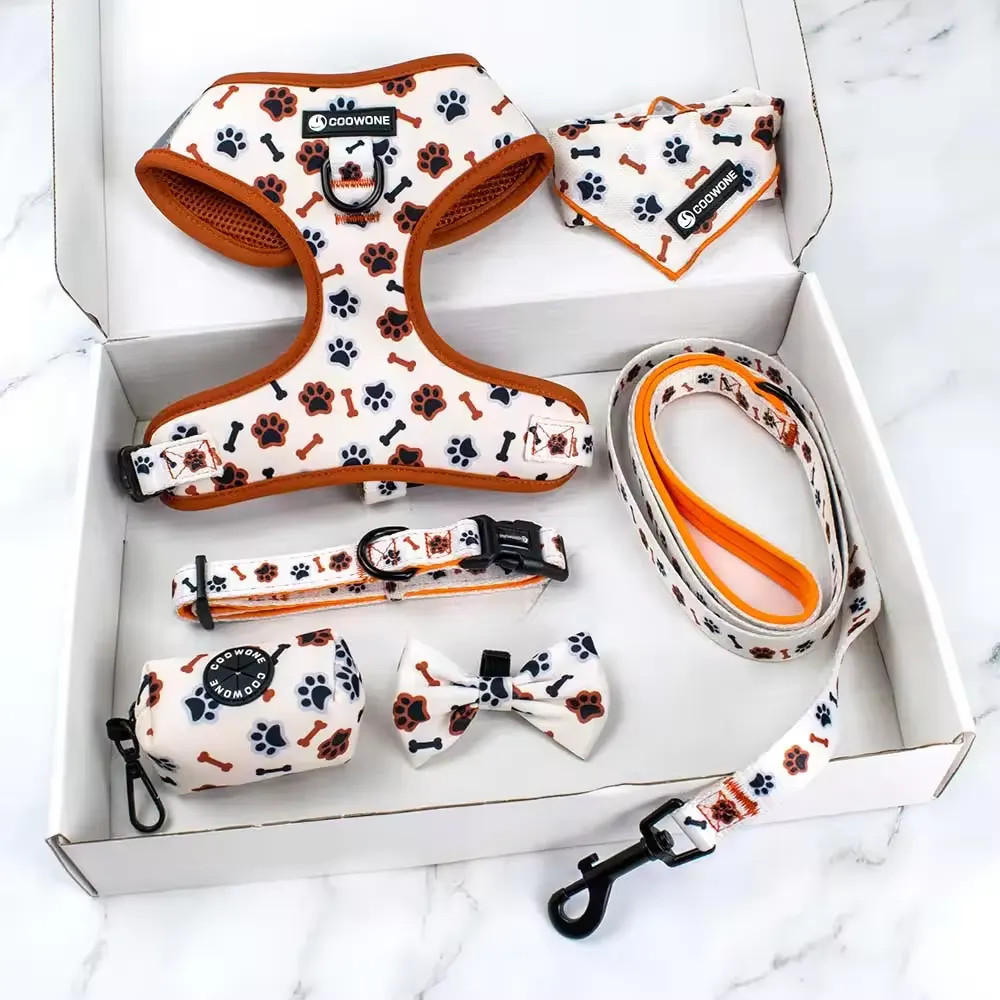
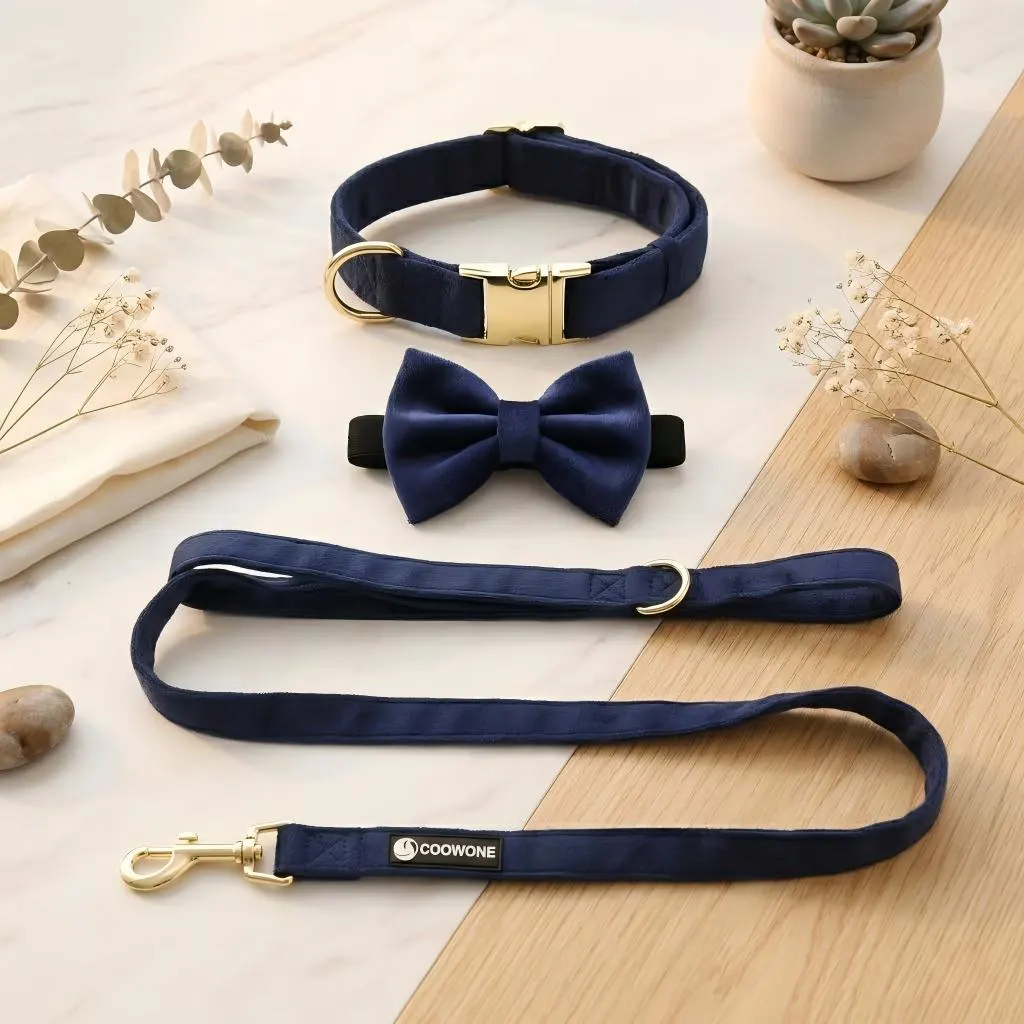
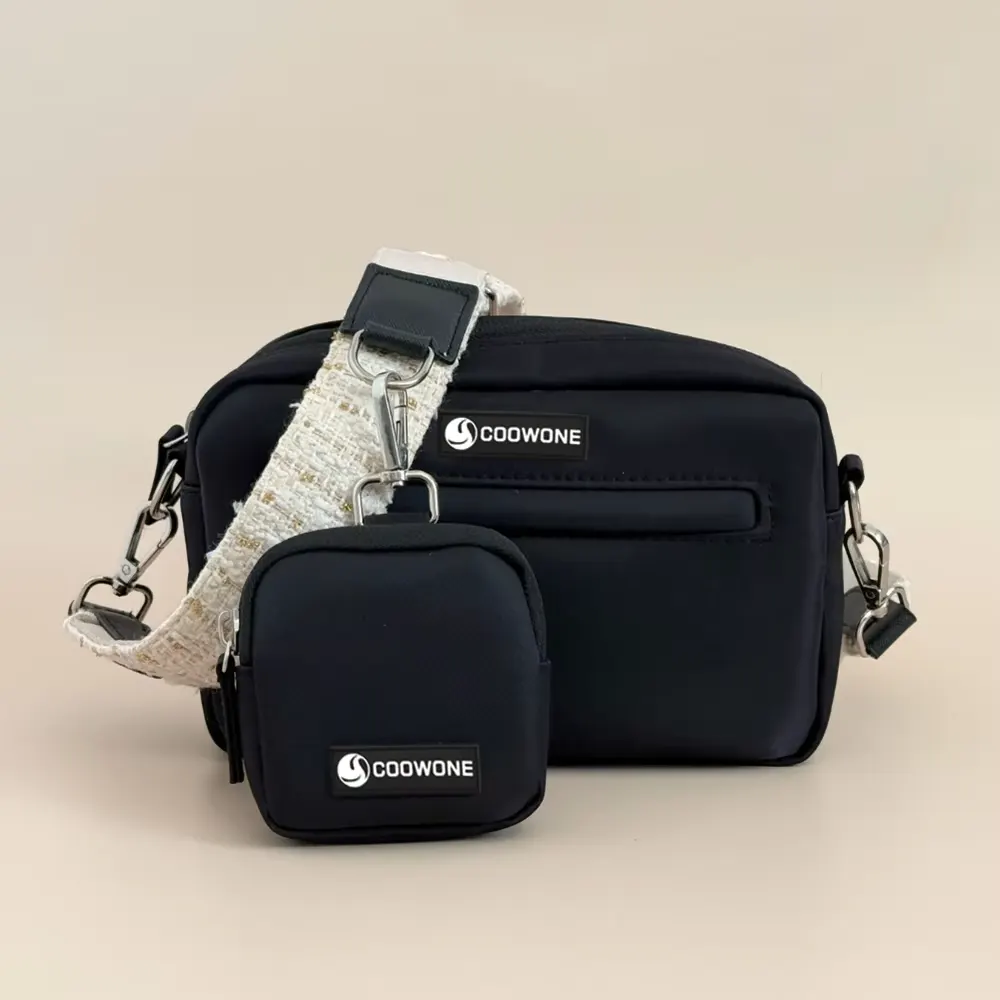
COOWONE manufactures custom harnesses, collars and leashes, and a full carry range from treat pouches to walking bags and pet carriers. Send us the nine fields above and you will get a real quote, not a placeholder.
Tell us what you want to make first →
参考
- 美国宠物用品协会, 2026 行业现状报告 / Industry Trends and Stats. Total US pet industry expenditure $158bn in 2025 (+3.7%); supplies, live animals and OTC medicine $34.4bn (21.8% of total), projected $35.6bn for 2026. https://americanpetproducts.org/industry-trends-and-stats
- 亚太地区协会 2026 State of the Industry Report ownership data, as reported by Pet Food Processing: 71% of US households (about 94–95 million) owned a pet in 2025; 关于 71 million households own dogs. https://www.petfoodprocessing.net/articles/20315-us-pet-food-treats-generate-683-billion-in-sales
- The size-curve argument, including the inventory arithmetic behind it, is set out in What should you sell alongside your dog harness? (酷王). Internal reference.